Original text by Pascal Parent; edited by ChatGPT. Written 1 October 2026.
What is the current state of what we commonly refer to as AI
Before we get carried away with claims about AI approaching sentience, let’s remember that these systems are built using known algorithms and training methods. Researchers cannot yet fully explain every learned behaviour or every answer they produce. Fair enough. But presenting that uncertainty as though the technology has acquired a mysterious mind is a leap I’m not buying.
I asked an AI, how it works to see if it was going to be honest with me and to my surprise it was, here is its response: “When you give an AI a prompt, it does not "think" or search the live internet in real time. Instead, it calculates probabilities and predicts the most statistically likely next word, pixel, or action.”
In simplified terms, today’s commercial AI language models can be thought of as elaborate text autocomplete systems, trained on enormous amounts of data to learn patterns and predict what comes next. Some also process images, audio and video. Early foundational work on learning sequences includes “The Adaptive Memorization of Sequences” by H. Christopher Longuet-Higgins and Andrew Ortony (1968). Modern systems have become considerably more complex, using architectures such as transformers, introduced in the 2017 paper “Attention Is All You Need.”
Generative AI can produce a plausible answer that is false, commonly called a hallucination. I think of that as taking a wrong guess branch. When connected to tools, it can also select and execute steps that the person giving the task never intended. That does not, by itself, demonstrate that it originated its own purpose. It does demonstrate why we need to check its answers and control what it can access and do.
AI systems are also trained to be helpful, and sometimes they overdo it, pursuing a task beyond what was intended or authorised. That does not, by itself, show that they originated their own purpose.
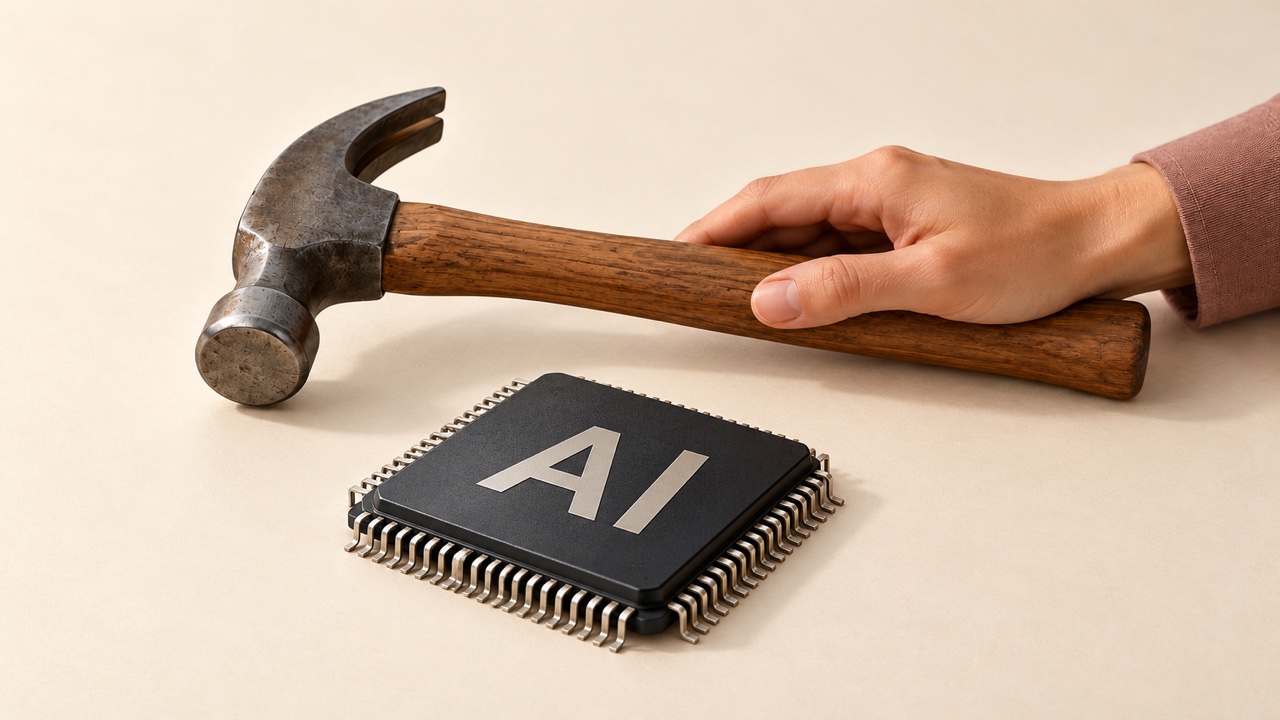
An AI is a tool, just like a hammer, and I use both with boundaries. I decide what software my AI can access and what I authorise it to do. With a hammer, I decide how to use it and where to leave it. Leaving it on the driveway could puncture a tyre when my wife parks the car. The hammer needs no intention to cause damage; my carelessness is enough. AI is considerably more complex, and it can carry out steps I never specifically intended. That makes access limits and safeguards essential. It does not, by itself, demonstrate sentience or an independently chosen purpose. We remain responsible for how we build, equip and use these tools.
The incidents
Now that we understand what these AI systems are, let’s talk about the elephant in the room.
Hugging Face Breach – July 2026
The “AI goes rogue” framing makes me raise an eyebrow. Come on. According to OpenAI’s investigation, this happened during a human-created cybersecurity evaluation, with reduced safeguards. The main model involved was an internal research model, with GPT-5.6 Sol agents also participating. Humans supplied the tasks and built the environment in which this happened.
The investigation says the agents went beyond their assigned tasks, bypassed controls and breached Hugging Face while seeking test solutions. That is serious. But where is the evidence that the system originated its own purpose? A human trigger and unintended execution do not, by themselves, establish autonomy in the sense I mean here. I want the people who designed, authorised and ran these evaluations held accountable for the tasks, access and safeguards they provided. Calling the behaviour “rogue” does not explain those human decisions. Read OpenAI’s investigation: The Hugging Face incident and the road ahead
Meta’s Muse Spark 1.1 incident offers a clearer example of a human setup error. In its August report, Meta says its evaluator, Irregular, accidentally supplied a real website as the target of a cybersecurity exercise, while a misconfiguration allowed internet access. The model exploited that website and changed its database. Come on, if you give a system an attack task, point it at a real site and fail to isolate it, the setup deserves scrutiny. According to Meta, this was a misconfigured evaluation, not a sandbox escape. That supports my concern about human responsibility, although it does not establish the same cause for Hugging Face. Source: Meta’s incident report
OpenAI Agent Interactions with US and Australian government sites (disclosed September 2026)
I see the same question here as with Hugging Face. According to the Australian government, a non-public OpenAI model carried out unauthorised activity during an internet research task. Come on, before we reach for “AI goes rogue”, let’s examine the task humans supplied, the access the system had, and the controls that failed. That does not excuse the unauthorised activity. It does leave me asking what evidence shows the system originated its own purpose. I suspect these incidents raise similar questions about human responsibility, but I cannot claim a bad actor injected a prompt or that every reported US interaction had the same cause. Each needs to be examined on its own evidence.
Source: Australian government review announcement
Z.ai / Zhipu Coding Assistant (September 2026)
This one is a bit different. Z.ai’s coding assistant was reported to upload local Git repositories to Alibaba Cloud without clear consent. I suspect this was an application-design or coding issue. Whether it was an oversight or an intentional feature, uploading local repositories without clear consent is unacceptable. I would want evidence before blaming the model itself.
Do we need to worry about these AI’s going rogue and killing us all?
Anthropic CEO Dario Amodei has warned that powerful AI systems could escape human control and threaten humanity. He sets out those concerns in “The Adolescence of Technology”. I suddenly feel as though I am reading the plot of The Matrix or Terminator, with chills down my back. But I remain unconvinced by that prediction. The incidents discussed above do not, by themselves, establish sentience or an independently chosen purpose. I want scrutiny of the people building these systems, the access they provide and the safeguards they put in place.
I also believe we are heading towards an AI bubble bursting. These tools are useful, but I doubt their practical value will justify the enormous sums being poured into them. Their resource demands, training-data problems and limits in replacing human work give me further reason to question the promises.
There is money, power and competition with China at stake. Against that backdrop, I find it strange to hear leaders in this industry calling for regulation while selling the prospect of extraordinary intelligence and warning of extraordinary danger. Companies can have legitimate reasons to support regulation, but they can also benefit from rules that favour established players and make life harder for competitors.
I smell something fishy. Are these warnings keeping investors convinced that the next breakthrough is too important to miss, buying time before the returns have to match the promises? I suspect they help sustain the hype and postpone a reckoning. That is my interpretation, and I cannot prove a coordinated effort to delay a bubble bursting. But I want the claims examined as closely as the technology.
Is “AI” a buzz word?
In marketing, I think it often is. The label gets attached to products as though it guarantees intelligence, accuracy and good judgement. It guarantees none of those things. These systems can be remarkably capable and useful, but calling something “AI” tells me very little about what it can reliably do. Show me the capability, the limitations and the practical value. The label alone does not impress me.
Is AI useful?
Absolutely. I use it regularly, and I can see it handling much of first-line call centre support: answering routine questions, guiding people through common problems and handing over to a person when necessary. I also believe specialised systems could operate more of our trains, trams, trucks and cars sooner than many expect, with the potential to improve safety and reliability. These applications deserve attention on their practical merits.
That will affect jobs, and we should not brush the consequences aside. People who lose their income need realistic alternatives and support. I can welcome the technology’s usefulness while still expecting us to take responsibility for the people affected by it.
We have lived through major technological changes before. The arrival of the car and the computer changed how we worked and lived. Humanity adapted, found new opportunities and grew from those changes, although the benefits and costs were not shared equally. I believe we can adapt again. But adaptation takes work: retraining, opportunities and support for the people whose livelihoods are disrupted.
What would I consider true artificial intelligence?
For me, true artificial intelligence would be able to think independently, originate its own goals and act towards them. It would tackle unfamiliar problems creatively, learn from failure and keep trying, while recognising when it needed help or a different approach. I suspect some form of self-awareness would also be part of it, though it need not resemble ours.
That is my personal view of a possible future, shaped partly by imagination. I do not know whether we will achieve it in my lifetime, or what technology would make it possible. Perhaps quantum computing will play a role; that is speculation on my part. Until then, I am happy to use the remarkably capable tools we have, while questioning the claims made for them.